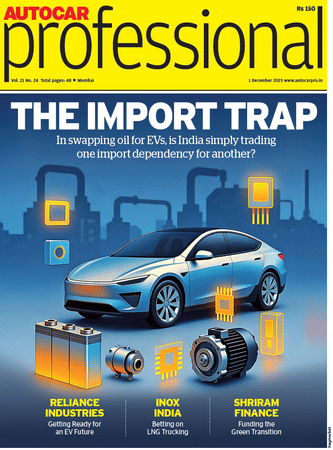





Reliance's Nitin Sheth Predicts EV Industry Will Mirror Telecom Revolution
Sheth believes network effects, such as the reliability of charging, will become the key differentiator for EV adoption, rather than vehicle specifications alone.
 11 Nov 2025
 2072 Views
Share -
2072 Views
Share -


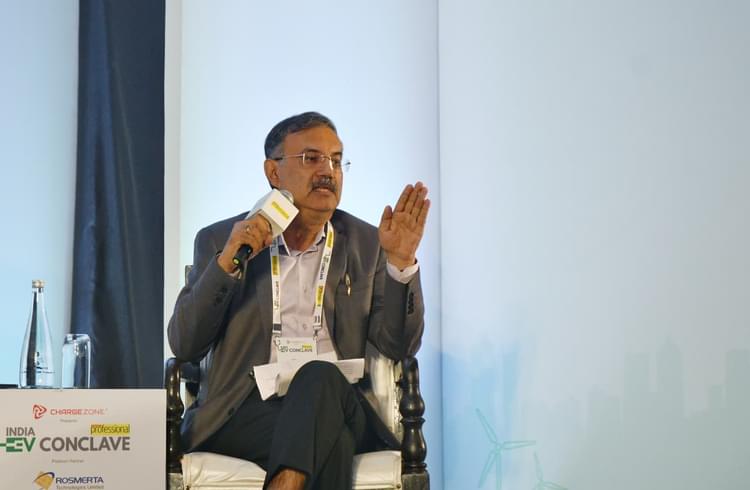
Nitin Sheth, CEO of New Mobility at Reliance Industries, painted a transformative vision for India's electric vehicle sector, predicting it will undergo a disruption similar to the telecommunications revolution, where the focus shifts from hardware to energy provision and service quality.
"The EV industry will go through the same phase that telecom went through. The EV industry will become agnostic to hardware over next 6-7 years—it will be about who is giving better energy," Sheth told attendees at the India EV Conclave panel discussion.
Sheth's analogy to telecom—where fierce competition on network quality and pricing eventually mattered more than handset brands—suggests a future where the source, cost, and reliability of charging energy becomes the key differentiator for EV adoption, rather than vehicle specifications alone.
"After some time we will be selling energy and for selling energy we need infra," Sheth explained. "People who bring energy at lowest cost and provide service will be winners in future." This perspective positions companies like Reliance, which has extensive energy assets including solar and renewable infrastructure, as potential major players in the EV ecosystem.
Central to Sheth's vision is dramatically reducing the cost of energy for EVs. "If the cost of energy comes down then EV will become a mass market," he said, identifying energy pricing as the critical barrier to mass-market EV adoption in price-sensitive India.
To achieve this cost reduction, Sheth called for fundamental infrastructure modernization. "We should focus on modernising the grid to achieve the 30% target and link solar to grid for cheaper cost," he said, emphasizing the interconnection between renewable energy deployment and affordable EV charging.
India has set a target for EVs to comprise 30% of passenger vehicle sales by 2030, an ambitious goal that Sheth believes is achievable only through structural changes in energy infrastructure rather than continued subsidy dependence.
Sheth urged policymakers to evolve their approach. "The government should move away from incentives to structural enablers such as infrastructure and charging protocols," he said. This represents a significant shift in thinking from demand-side subsidies—which have characterized programs like FAME—toward supply-side infrastructure investments that create lasting ecosystem advantages.
The emphasis on linking solar energy to the power grid aligns with India's broader renewable energy goals and could address two challenges simultaneously: making EV charging more affordable through lower-cost renewable electricity, and providing additional demand that improves the economics of solar power installations.
Sheth's telecom analogy also carries implications for market structure. Just as telecom saw consolidation around a few major network operators competing on coverage, quality, and price, the EV charging landscape might similarly evolve toward larger, integrated players who can offer nationwide networks, consistent service quality, and competitive energy pricing through scale advantages and vertical integration.
India's charging infrastructure grew to 25,202 public stations by December 2024, but the current fragmented market with numerous small operators facing low utilization rates suggests the sector may indeed be ripe for the kind of transformation Sheth envisions.
The focus on energy costs also addresses a fundamental challenge in India's EV adoption: total cost of ownership. While EVs offer lower operating costs than internal combustion vehicles, the higher upfront purchase price remains a barrier. If charging energy can be provided at significantly lower costs—particularly through renewable sources—the economic case for EVs strengthens considerably, potentially accelerating adoption even without purchase subsidies.
Sheth's vision positions Reliance, with its combination of renewable energy assets, retail presence, and capital resources, as a potential key player in this energy-centric EV future. The company has already announced significant investments in the clean energy and EV ecosystems, and Sheth's comments suggest a strategy focused on the energy infrastructure layer rather than vehicle manufacturing.
However, realizing this vision faces significant challenges. Grid modernization requires massive capital investment and coordination across multiple stakeholders. Integrating solar power effectively requires addressing intermittency through storage solutions. And shifting consumer focus from vehicle attributes to energy services requires a mature market and standardized protocols that don't yet exist in India.
Nevertheless, Sheth's perspective offers a compelling long-term vision for India's EV transition—one where the country's renewable energy potential becomes a strategic advantage in making electric mobility accessible and affordable for the mass market.
The India EV Conclave 2025 was presented by Chargezone, with Rosmerta Technologies as the Platinum Partner. The event is powered by IPG Automotive and Gulf Oil Lubricants India, with PTC serving as the Technology Partner. Associate Partners include Spark Minda, Radici Group, and Delta Electronics. The conclave also has trade partnerships with FADA, ASDC, and ICAT.
RELATED ARTICLES
Citroën India Reports Three-Fold Sales Increase in Q4 2025
 Shruti Shiraguppi
16 Dec 2025
Shruti Shiraguppi
16 Dec 2025
Automaker's new strategy drives growth as Q4 sales reach three times Q3 levels, with vehicle exports up 18.8 percent.

Tata Group Reviews Clean Energy and EV Manufacturing Plans in Uttar Pradesh
 Angitha Suresh
16 Dec 2025
Angitha Suresh
16 Dec 2025
Tata Group leadership discussed progress on power generation, renewable energy projects, and potential expansion of vehi...
Hyundai NEXO Receives Top Safety Rating from Euro NCAP
Angitha Suresh
16 Dec 2025
The hydrogen fuel-cell SUV earned five stars in European safety testing, scoring 90 percent for adult occupant protectio...