




Industry Leaders Highlight Skilling Crisis in India's EV Transition
EV technicians need to understand high-voltage electrical systems, battery management, power electronics, and software diagnostics.
 11 Nov 2025
 2498 Views
Share -
2498 Views
Share -


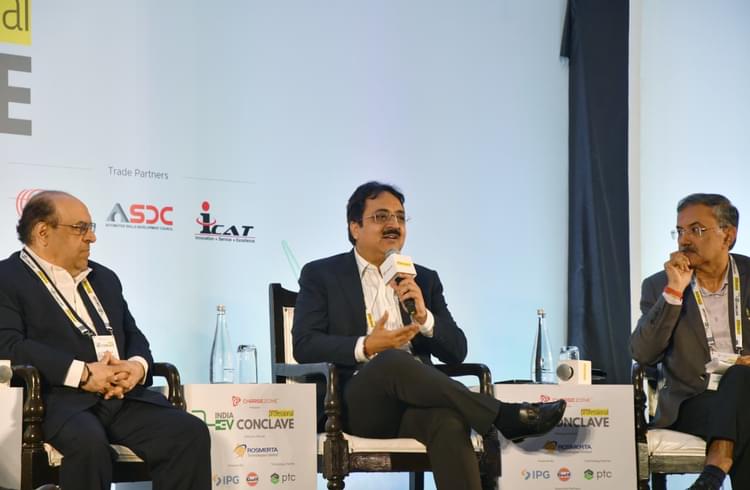
As India accelerates its electric vehicle transition, industry leaders at the India EV Conclave warned that inadequate workforce skilling could become a major bottleneck, with training for technicians and service personnel consistently treated as an afterthought by both government and manufacturers.
Vinkesh Gulati, Chairperson of the Automotive Skills Development Council (ASDC), was blunt in his assessment: "We are in a nascent stage in terms of skilling in EV space. The problem is with both the government and OEMs. Whenever we plan anything, be it auto mission plan and products, skilling is the last thing we plan."
The ASDC started working on EV skilling initiatives five years ago, but Gulati noted that original equipment manufacturers typically invest in research and development first and address skilling requirements only afterward—a sequencing he argued is fundamentally flawed for ensuring smooth technology transitions.
Vikram Gulati from Toyota Kirloskar Motor echoed these concerns and proposed a concrete solution: "All OEMs need to put 50% of CSR towards skilling." He warned that without proper training for aftermarket technicians, there will be significant resistance to EV adoption, as service network capabilities lag behind vehicle sales.
The skilling challenge is particularly acute because electric vehicles require fundamentally different maintenance and repair expertise compared to internal combustion vehicles. Technicians need to understand high-voltage electrical systems, battery management, power electronics, and software diagnostics—skills largely absent from traditional automotive training programs.
India's EV sales crossed 2 million units in 2024, creating an urgent need for trained service personnel across the country. However, the skilling infrastructure has not kept pace with vehicle deployment, creating potential quality and safety concerns in the service ecosystem.
Vinkesh Gulati did highlight one positive development: the shift toward green energy vehicles is attracting more women to automotive technical training. "With green energy vehicles a lot of women are getting trained in auto production," he said, suggesting that the EV transition might help address long-standing gender imbalances in automotive technical roles.
However, this progress is undermined by policy inconsistency. "Until policies are not consistent, consumers will remain confused," Vinkesh Gulati noted, pointing to frequent changes in incentive schemes, technical standards, and regulatory requirements that make it difficult for training programs to keep pace.
The skilling challenge extends beyond technical training to include sales personnel, fleet managers, urban planners, and charging infrastructure operators—all requiring new knowledge and capabilities. The ASDC has developed curriculum frameworks and certification programs, but industry executives stressed that implementation and scaling remain inadequate.
The panelists called for a more integrated approach to policy planning that treats skilling as a foundational requirement rather than a supplementary consideration. They argued that auto mission plans, product launches, and infrastructure rollouts should all have accompanying, well-funded skilling components built in from the start.
The corporate social responsibility (CSR) mandate proposed by Vikram Gulati would represent a significant shift in resource allocation. India's automotive companies collectively spend substantial sums on CSR activities, and directing half of these resources toward skilling could dramatically accelerate workforce development for the EV transition.
With India targeting 30% EV penetration by 2030, the skilling challenge will only intensify. The gap between vehicle deployment and service network readiness could undermine consumer confidence, particularly if early EV adopters face long wait times, poor service quality, or safety incidents related to inadequately trained technicians.
The industry leaders' message was clear: India's EV success depends not just on manufacturing capacity, charging infrastructure, and purchase incentives, but fundamentally on people—trained, certified technicians who can install, maintain, and repair electric vehicles to the standards consumers expect. Without prioritizing this human capital development, the hardware and infrastructure investments risk falling short of their potential impact.
The India EV Conclave 2025 was presented by Chargezone, with Rosmerta Technologies as the Platinum Partner. The event is powered by IPG Automotive and Gulf Oil Lubricants India, with PTC serving as the Technology Partner. Associate Partners include Spark Minda, Radici Group, and Delta Electronics. The conclave also has trade partnerships with FADA, ASDC, and ICAT.
RELATED ARTICLES
Citroën India Reports Three-Fold Sales Increase in Q4 2025
 Shruti Shiraguppi
16 Dec 2025
Shruti Shiraguppi
16 Dec 2025
Automaker's new strategy drives growth as Q4 sales reach three times Q3 levels, with vehicle exports up 18.8 percent.

Tata Group Reviews Clean Energy and EV Manufacturing Plans in Uttar Pradesh
 Angitha Suresh
16 Dec 2025
Angitha Suresh
16 Dec 2025
Tata Group leadership discussed progress on power generation, renewable energy projects, and potential expansion of vehi...

Hyundai NEXO Receives Top Safety Rating from Euro NCAP
Angitha Suresh
16 Dec 2025
The hydrogen fuel-cell SUV earned five stars in European safety testing, scoring 90 percent for adult occupant protectio...