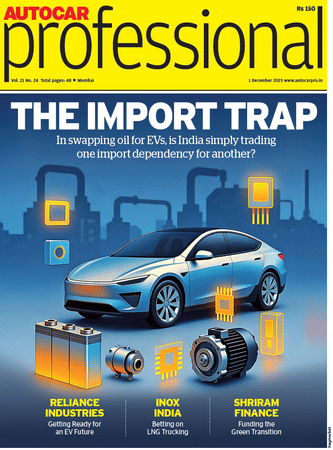





India's Top Automakers Oppose Weight-Based Emission Relief for Small Cars
Industry leaders say proposed exemption under new fuel efficiency norms would disproportionately benefit single manufacturer.
 By Autocar Professional Bureau
 2317 Views


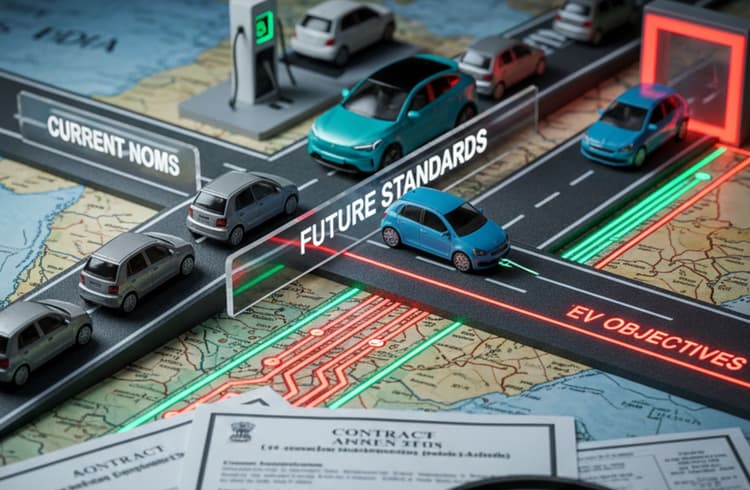
India's leading automakers including Tata Motors, Hyundai, Mahindra & Mahindra, and JSW MG Motor are urging the government to eliminate a weight-based emission concession for small cars under proposed fuel efficiency regulations, arguing the move would benefit only one company while undermining the country's electric vehicle objectives, according to Reuters.
The controversy centers on India's draft Corporate Average Fuel Efficiency norms, which propose tightening average carbon dioxide emissions to 91.7 grams per kilometer from the current 113 grams/km target. The government's latest draft includes leniency for petrol cars weighing 909 kilograms or less, measuring under four meters in length and with engine capacity of 1,200 cubic centimeters or below, citing their "limited potential for efficiency improvements."
While the companies did not identify the beneficiary in their letters, industry data and three automotive executives confirmed to Reuters that Maruti Suzuki would be the primary recipient of the exemption. Approximately 16% of Maruti's sales come from cars weighing under 909 kg, making it the country's largest seller of small cars.
In separate letters to various ministries involved in drafting the regulations, the automakers challenged the proposed exemption on multiple grounds.
Mahindra requested the removal of any "special category" or definitions based on size or weight, stating: "(This) can have adverse effects in terms of the nation's progress towards safer, cleaner cars, and can alter the level playing field for industry players."
Hyundai warned that the exemption could damage India's international reputation. "Abrupt policy changes favouring a specific segment risk undermining industry stability and customer interests, as future investments and technology rollouts are planned on the basis of established norms," the company said.
JSW MG Motor noted in its November 21 letter to the road transport ministry that over 95% of cars under 909 kg come from a single manufacturer. "A relaxation restricted to this weight band would disproportionately benefit one manufacturer," the company stated.
Three company executives told Reuters the 909 kg threshold was arbitrary and inconsistent with global standards.
Defending the proposed relief, Maruti Suzuki told Reuters that global markets including Europe, the United States, China, Korea and Japan all maintain provisions in their emission regulations to protect "very small cars."
"Small cars consume much less fuel and emit less carbon dioxide than bigger cars, so having this 'safeguard' will help both CO2 reduction and fuel saving," Maruti said, adding that demand for such vehicles has been declining as buyers increasingly prefer larger SUVs.
The dispute has delayed finalization of the regulation, which is considered crucial for automakers to plan future product portfolios and investments in powertrain technology. Under India's current norms, permissible carbon dioxide emission limits apply to all passenger cars weighing less than 3,500 kg. The new rules would make it harder for small cars to meet targets compared with large SUVs, pushing companies to increase electric vehicle sales.
Tata, Mahindra, JSW MG Motor, and India's power, transport and industries ministries did not respond to requests for comment.
RELATED ARTICLES
Citroën India Reports Three-Fold Sales Increase in Q4 2025
 Shruti Shiraguppi
 16 Dec 2025
Automaker's new strategy drives growth as Q4 sales reach three times Q3 levels, with vehicle exports up 18.8 percent.

Tata Group Reviews Clean Energy and EV Manufacturing Plans in Uttar Pradesh
 Angitha Suresh
16 Dec 2025
Angitha Suresh
16 Dec 2025
Tata Group leadership discussed progress on power generation, renewable energy projects, and potential expansion of vehi...
Hyundai NEXO Receives Top Safety Rating from Euro NCAP
Angitha Suresh
16 Dec 2025
The hydrogen fuel-cell SUV earned five stars in European safety testing, scoring 90 percent for adult occupant protectio...